
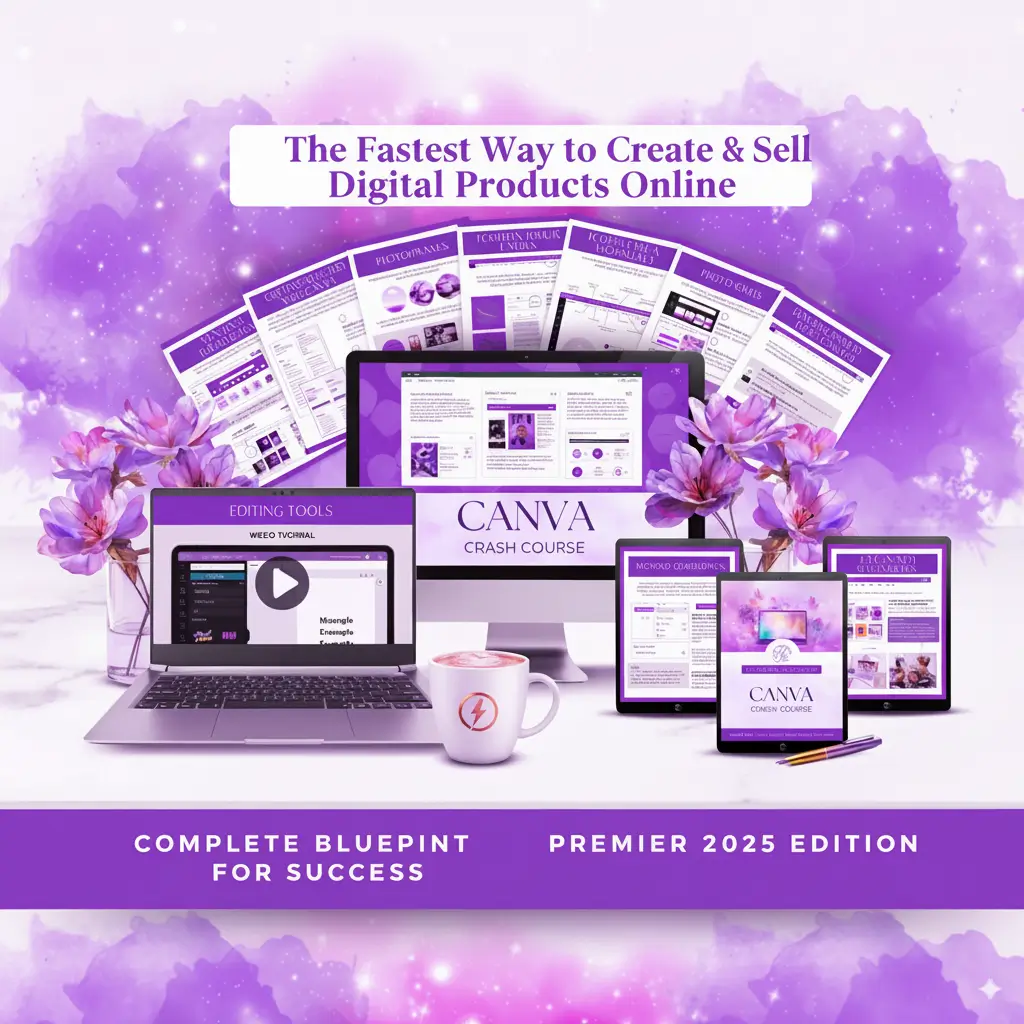
The American Dream has evolved. It is no longer strictly defined by a white picket fence and a 9-to-5 corporate ladder climb. Today, the new frontier of financial freedom in the United States is the Creator Economy—specifically, the lucrative world of creating and selling digital products.
With the US e-learning market projected to grow exponentially and the demand for instant-access digital goods at an all-time high, there has never been a better time to digitize your knowledge. Whether you are a graphic designer in Brooklyn, a financial advisor in Chicago, or a stay-at-home parent in Austin, digital products offer a low-overhead, high-margin path to passive income.
In this comprehensive guide, we will walk you through everything you need to know to launch a successful digital product business in the US market, from validation to navigating American sales tax nexus laws.
What Are Digital Products and Why Are They Booming?
A digital product is an intangible asset or piece of media that can be sold and distributed repeatedly online without the need to replenish inventory. Once created, it can be sold an infinite number of times.
Why the US Market Loves Digital Goods
- Instant Gratification: US consumers value speed. They want the solution now, not in 3-5 business days.
- Low Barrier to Entry: You don’t need a warehouse or logistics partners like USPS or FedEx.
- High Profit Margins: With no manufacturing or shipping costs, profit margins often hover around 90-99%.
- Scalability: You can sell to 10 people or 10,000 people with the same amount of effort.
Top High-Demand Digital Product Categories for 2026
Before you start building, you need to know what sells. Here are the categories currently dominating the US market:
1. E-books and Guides
Information is power. If you have expertise in a specific niche—like “Keto Dieting for Busy Moms” or “Cryptocurrency Tax Strategies for US Investors”—you can package it into a PDF.
2. Templates and Tools
Americans love efficiency. Anything that saves time sells well.
- Business: Resume templates, invoice generators, social media content calendars.
- Lifestyle: Digital planners for GoodNotes, Notion templates, budgeting spreadsheets.
3. Online Courses and Workshops
The US e-learning market is massive. Platforms like Teachable and Kajabi have created millionaires out of teachers. From coding bootcamps to sourdough baking classes, paid education is thriving.
4. Stock Photography and Graphic Assets
Brands need content. Selling Lightroom presets, fonts, icon packs, and stock video footage is highly profitable for creatives.
5. Printables
Popular on Etsy, these include items like wedding invitations, wall art, and homeschooling worksheets that the customer prints at home or a local print shop (like Staples or FedEx Office).
Step-by-Step: How to Create a Digital Product That Sells
Creating the product is often the fun part, but to ensure sales, you must follow a strategic process.
Phase 1: Market Research and Validation
Don’t rely on guesswork. Validate your idea using US-centric data.
- Keyword Research: Use tools like SEMrush or Google Trends to see what Americans are searching for. Look for high volume and low competition.
- Competitor Analysis: Look at best-sellers on Etsy or Amazon Kindle Store. Read the 3-star reviews to find gaps—what are customers complaining about? Fix that in your product.
Phase 2: Creation Tools
You don’t need expensive software to start.
- Canva: The go-to for e-books, checklists, and social media graphics.
- Notion: Perfect for creating interactive templates and dashboards.
- Loom/OBS: Essential for recording screen-share tutorials for courses.
- Google Workspace: Sheets and Docs are standard for creating templates.
Phase 3: Packaging
Perception is reality. In the US market, design matters. Even if your content is gold, a poor cover image will kill conversions. Create professional mockups (using tools like Placeit) to show your digital product on an iPad or laptop screen to make it feel “tangible.”
Choosing the Best Platform to Sell Digital Products
The platform you choose dictates your fees, marketing control, and customer experience. Here is a breakdown of the top contenders for US sellers:
1. Marketplaces (Etsy, Amazon KDP, Creative Market)
- Pros: Built-in traffic. Millions of Americans search these sites daily with credit cards in hand.
- Cons: High transaction fees, fierce competition, and you don’t own the customer email list.
- Best For: Beginners, printables, and graphic assets.
2. Dedicated Storefronts (Shopify, Stan Store, Payhip)
- Pros: Complete control over branding, you own the customer data, and lower transaction fees.
- Cons: You must drive your own traffic.
- Best For: Influencers, established brands, and those building a long-term business.
3. All-in-One Course Platforms (Kajabi, Teachable, Podia)
- Pros: Host videos, manage students, and handle email marketing in one place.
- Cons: Higher monthly subscription costs.
- Best For: Coaches and course creators.
Recommendation: For many US creators, a hybrid approach works best. Use Etsy to capture organic traffic and a Shopify or Stan Store link in your social bio for higher-ticket items.
Marketing Your Digital Goods to a US Audience
In the noisy US digital landscape, “build it and they will come” is a myth. You need aggressive, value-first marketing.
1. Short-Form Video (TikTok & Instagram Reels)
This is currently the highest ROI activity for digital products. Show the “behind the scenes” of using your planner, or the “before and after” of using your photo presets. The US algorithm favors engaging, authentic content.
2. Pinterest SEO
Pinterest is not social media; it’s a visual search engine. It is massive in the US for niches like home decor, education, and finance. Create vertical pins that link directly to your product landing page.
3. Email Marketing
This is where the money is made. Offer a “lead magnet” (a free mini-version of your product) in exchange for an email address. Use US-compliant ESPs (Email Service Providers) like ConvertKit or Mailchimp to nurture leads and upsell your paid products.
Critical Financial and Legal Considerations for US Sellers
Disclaimer: I am an AI, not a lawyer or CPA. The following is for informational purposes only.
Selling digital products in the US comes with specific bureaucratic hurdles that you cannot ignore.
1. Digital Goods Sales Tax (The Wayfair Ruling)
Since the South Dakota v. Wayfair Supreme Court ruling, states can require remote sellers to collect sales tax if they meet certain thresholds (Economic Nexus).
- The Complication: Some states tax digital goods (like ebooks), while others do not.
- The Solution: Platforms like Etsy and Gumroad act as the “Merchant of Record” and handle this for you. If you use Shopify/WooCommerce, you may need software like TaxJar or Quaderno to automate compliance.
2. Copyright and Intellectual Property
The US takes IP theft seriously.
- Protect Yourself: Add a copyright notice to your footers. Consider registering a trademark if you have a unique brand name.
- Don’t Steal: Never use “Commercial Use” fonts or images in your products unless you have purchased the correct license.
3. Payment Gateways
Ensure you offer the payment methods Americans trust most: Stripe (for credit cards), PayPal, and increasingly, Apple Pay and Google Pay. Frictionless checkout is key to high conversion rates.
Pricing Strategies for Maximum Profit
Pricing digital products is an art. Too low, and people think it’s low quality. Too high, and you lose volume.
- Tiered Pricing: Offer a Basic (PDF only), Standard (PDF + Video walkthrough), and Premium (PDF + Video + 1-on-1 consultation) version.
- The Tripwire: Sell a low-cost product ($7-$27) to turn a lead into a customer, then upsell a higher-ticket course ($97-$297) immediately after checkout.
- Psychological Pricing: In the US, prices ending in .99 or .95 (e.g., $19.99) historically convert better than rounded numbers.
Conclusion: Start Building Your Asset Today
Creating and selling digital products is more than just a side hustle; it is a vehicle for financial independence. The US market is hungry for knowledge, organization, and entertainment. By leveraging the tools and strategies outlined above, you can turn your expertise into a scalable income stream.
The barrier to entry is low, but the potential for growth is uncapped. Your first digital product doesn’t have to be perfect; it just has to be published. Start today.
Ready to scale?
If you are serious about treating this as a business, invest in a dedicated ecommerce platform and start building your email list immediately. The best time to start was yesterday; the second best time is now.
best platform to sell digital productsbuy digital product templatesecommerce software for creatorsstart an online businesssell pdfs onlineStan Store pricingKajabi free trialhow to price digital products
passive income ideas 2024how to make money online USEtsy digital downloadsselling notion templatesdigital product tax nexusShopify for digital productsGumroad alternativesebook templatesPLR digital productsonline course platforms USA