
You did everything right. The pitch was sharp, the prospect was interested, and then you heard it:
“It’s too expensive.”
“I need to think about it.”
“We’re already working with someone else.”
For many salespeople, this is where deals die. Not because the product was wrong, but because the objection was mishandled.
Objection handling is the skill of understanding, addressing, and resolving a buyer’s concerns so they can move forward with confidence. It’s one of the highest-leverage skills in sales, and it can be learned. This guide covers what objections really mean, a simple framework for handling them, and scripts you can use today.
What Is Objection Handling?
Objection handling is the process of responding to a prospect’s doubts, hesitations, or pushback during the sales process, in a way that builds trust and keeps the conversation moving.
Done well, it is not arguing, pressuring, or “defeating” the buyer. It is helping them work through a decision.
Why Objection Handling Matters
Objections are a buying signal
A prospect who raises a concern is engaged. People rarely bother to object to something they have no interest in. A silent prospect is often a lost one.
Most deals face resistance
Almost every sale, whether B2B, real estate, insurance, coaching, or retail, includes at least one moment of hesitation. The reps who close consistently are usually the ones who handle those moments best.
It protects your pipeline
Unaddressed objections cause deals to stall, “ghost,” or slip into next quarter. Strong objection handling keeps opportunities alive.
It builds trust
When you respond calmly and honestly, buyers see you as an advisor, not a pushy seller. Trust is what ultimately wins business.
The 5 Most Common Sales Objections
Almost every objection falls into one of these categories:
- Price: “It’s too expensive” or “We don’t have the budget.”
- Timing: “Now isn’t a good time” or “Call me next quarter.”
- Authority: “I need to talk to my boss/partner/team.”
- Need: “We’re fine with what we have” or “I don’t see why we need this.”
- Trust: “I’m not sure this will work” or “I’ve never heard of your company.”
Knowing which type you’re facing tells you how to respond.
A Simple Objection Handling Framework: LAER
One of the most widely taught methods is LAER:
L: Listen. Let the prospect finish. Don’t interrupt or jump to defend.
A: Acknowledge. Show you heard them. “That’s a fair concern.”
E: Explore. Ask questions to find the real issue behind the objection. “When you say it’s expensive, what are you comparing it to?”
R: Respond. Now, and only now, give a tailored answer based on what you learned.
The key is exploring. The first objection is often not the real one.
Objection Handling Examples and Scripts
“It’s too expensive.”
“I understand, price matters. Can I ask what you were expecting to invest? That way I can show you where the value lies, or whether there’s an option that fits better.”
Why it works: It treats price as a conversation about value, not a fight.
“I need to think about it.”
“Of course. It’s an important decision. What specifically would you like to think through? If it helps, I can answer those questions now.”
Why it works: It surfaces the hidden concern without pressure.
“We’re already using a competitor.”
“That’s great, it means you already see the value in this kind of solution. Out of curiosity, what’s working well, and is there anything you’d improve?”
Why it works: It respects their choice and opens the door to gaps.
“I need to check with my boss.”
“Absolutely. To make that conversation easier, what questions do you think they’ll ask? I’m happy to put together a short summary, or join the call.”
Why it works: It helps you support the real decision-maker.
“Now isn’t the right time.”
“Understood. What would need to change for the timing to be right? And what’s the cost of waiting another few months?”
Why it works: It clarifies whether timing is real or a polite brush-off.
Objection Handling Techniques That Work
- Pause before answering. A short silence signals confidence and respect.
- Ask, don’t tell. Questions uncover real concerns. Statements trigger defensiveness.
- Use stories and proof. A short customer example is more persuasive than a claim.
- Reframe, don’t contradict. “I see it a bit differently” works better than “You’re wrong.”
- Confirm resolution. After responding, ask, “Does that address your concern?”
- Know when to walk away. Not every prospect is a fit, and that’s okay.
Common Objection Handling Mistakes
- Getting defensive or arguing with the prospect
- Answering too fast before understanding the real issue
- Talking too much instead of asking questions
- Using scripts word for word, which sounds robotic
- Ignoring objections and hoping they go away
- Discounting immediately, which signals the price was inflated and weakens your value
Prepare Before the Call
The best objection handling happens before the objection. Build a simple prep system:
- List your top 10 objections from past conversations.
- Write a clear, honest response to each.
- Collect proof: testimonials, case studies, numbers.
- Practice out loud, ideally with a colleague.
- Review and refine after each real conversation.
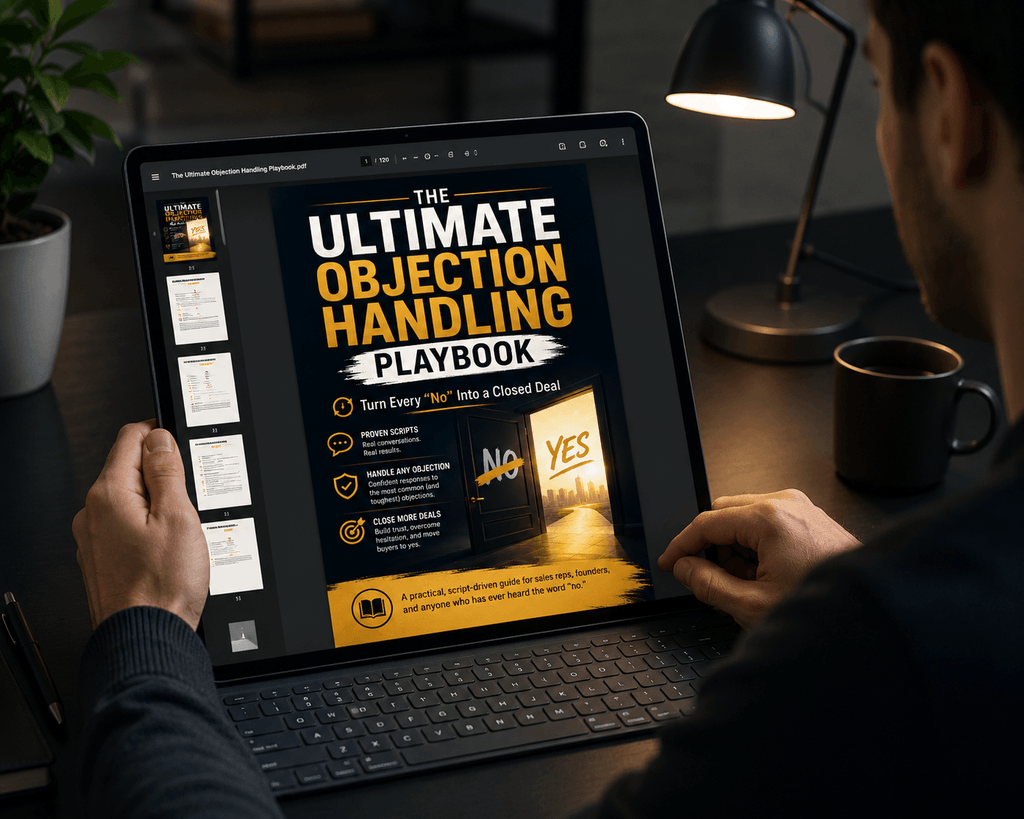
Why Get Our Objection Handling Ebook?
Articles can teach you the basics. A focused guide gives you a complete system you can use on every call. Inside our ebook, you’ll find:
- ✅ The most common objections by category, with word-for-word responses
- ✅ Step-by-step frameworks you can apply in any industry
- ✅ Ready-to-use scripts for phone, email, and in-person selling
- ✅ Question banks to uncover the real concern behind each objection
- ✅ Practice exercises to build confidence fast
- ✅ Quick-reference cheat sheets to keep beside you on calls
Whether you’re a new salesperson, an experienced rep, a business owner, or a freelancer who sells your own services, you’ll finish with a repeatable approach to turning hesitation into confident decisions.
Frequently Asked Questions
What is objection handling in sales?
It’s the process of understanding and responding to a prospect’s concerns so they can move forward in the buying decision.
What are the best objection handling techniques?
Listening fully, acknowledging the concern, asking questions to find the real issue, and responding with relevant value and proof. The LAER framework is a popular structure.
How do you handle the “it’s too expensive” objection?
Don’t discount right away. Ask what they’re comparing it to, reconnect the price to the value and results, and offer options if appropriate.
Is objection handling manipulation?
Not when done honestly. The goal is to understand concerns and help the buyer make a good decision, not to pressure them.
Can I learn objection handling without experience?
Yes. Frameworks, scripts, and practice make it a learnable skill for beginners.
Does this work for non-sales roles?
Yes. Entrepreneurs, consultants, recruiters, and anyone who persuades or negotiates can use these skills.
Stop Losing Deals to Hesitation
Every “no” you hear is information. The professionals who win most often aren’t the most aggressive. They’re the best prepared, the best listeners, and the most confident when concerns come up.
👉 Download the Objection Handling Ebook now and learn how to turn objections into opportunities.
One Comment