You’ve done the discovery, delivered a strong presentation, and the prospect is nodding. Then you share the number, and the room changes:
“That’s more than we expected.”
“We got a lower quote.”
“It’s just not in the budget right now.”
Price objections are the most common objection in sales, and the way you respond usually decides whether you win the deal at full value, lose it, or give away margin you didn’t need to.
This guide shows you how to handle price objections calmly and honestly, with a five-step method and scripts you can adapt to your own voice.
What Is a Price Objection?
A price objection is any pushback on cost: “too expensive,” “out of budget,” “your competitor is cheaper,” or “I can’t justify this.” It rarely means the buyer thinks the price is the only issue. It usually means one of these:
- They don’t yet see enough value to justify the cost.
- They have a real budget limit that you need to understand.
- They’re comparing you to something (a competitor, a DIY option, or doing nothing).
- They’re using price as a polite excuse to cover a different concern, such as trust, timing, or authority.
Your first job is to figure out which one you’re facing.
Why Price Objections Matter in Canada
Canadian buyers tend to be careful, relationship-oriented, and well-informed. A few market realities shape how price conversations go:
- Buyers compare. Online research means prospects often arrive with competitor quotes in hand.
- Taxes affect perception. GST/HST and provincial sales tax (PST or QST, depending on the province) are added to quoted prices, so be clear about whether your numbers include or exclude tax.
- Currency matters. If you quote in USD to Canadian buyers, the exchange rate can create sticker shock. Quote in CAD whenever you can.
- Trust and reputation carry weight. Canadian buyers often value straightforward, low-pressure selling over aggressive tactics.
- Cost-conscious conditions. When household and business budgets feel tight, price scrutiny increases, which makes value conversations more important, not less.
The 5-Step Method for How to Handle Price Objections
Step 1: Stay calm and don’t react
A price objection isn’t an attack. Pause, breathe, and resist the urge to defend or discount. Your calm tells the buyer the price is fair.
Step 2: Acknowledge the concern
“That’s a fair reaction, and I want to make sure this makes sense for you.” Acknowledging is not agreeing to a lower price. It’s showing respect.
Step 3: Ask questions to find the real issue
- “When you say it’s higher than expected, what were you expecting?”
- “What are you comparing it to?”
- “Is it the total amount, or how it’s structured?”
- “Setting price aside, is this the right solution for you?”
That last question is powerful. If the answer is yes, price is the real barrier. If it’s hesitant, there’s a hidden concern to uncover.
Step 4: Reconnect price to value
Tie the cost to outcomes that matter to them: time saved, revenue gained, risk reduced, or problems avoided. Use their own words from discovery.
Step 5: Offer options, not discounts
If there’s a real budget gap, adjust the scope, payment terms, or package, rather than simply cutting the price. This protects your value and gives the buyer a way forward.
Price Objection Scripts and Examples
“It’s too expensive.”
“I understand, and I want to make sure it’s the right fit. Can I ask what you were expecting to invest, or what you’re comparing it to?”
Why it works: It turns a complaint into a conversation about value.
“Your competitor is cheaper.”
“That’s helpful to know. Can we look at what’s included in each? Sometimes the difference is in the details, like support, setup, or results. If it turns out they’re the same, I’d rather you know that.”
Why it works: It invites comparison without attacking the competitor, and shows honesty.
“We don’t have the budget.”
“Thanks for being upfront. Is it that the funds aren’t available at all, or that it’s more than you planned for this quarter? Depending on that, there may be a smaller starting option or a different payment schedule.”
Why it works: It separates a true constraint from a preference and opens flexible options.
“Can you do any better on price?”
“I’d like to help make this work. If I can adjust something, what would you be able to commit to in return, such as a longer term, a faster decision, or a smaller scope?”
Why it works: It protects your margin by trading value for value, instead of giving a discount for free.
“I need to think about the price.”
“Of course. When you think it over, what will you be weighing it against? I’m happy to answer any question now so you have everything you need.”
Why it works: It surfaces the real comparison without pressure.
“It’s not worth that much.”
“I hear you. Let’s look at what this solves for you. You mentioned [problem from discovery]. What does that cost you each month right now?”
Why it works: It makes the cost of not acting visible.
Pricing Techniques That Reduce Objections Before They Start
- Build value first. Don’t reveal price until the buyer understands the benefit.
- Anchor with outcomes. Frame cost against the result, not in isolation.
- Offer good, better, best options. Choices shift the question from “yes or no” to “which one.”
- Break it down fairly. Per-month or per-use framing can make a large number feel manageable, as long as it’s honest.
- Be transparent about taxes and fees. Surprises erode trust fast. State whether GST/HST is included.
- Quote in CAD. Removes currency confusion for Canadian buyers.
- Use real proof. Testimonials, case studies, and verifiable results beat claims.
Mistakes to Avoid
- Discounting immediately. It signals the price was inflated and trains buyers to haggle.
- Getting defensive. Arguing about price makes it a contest.
- Over-justifying. Long explanations sound insecure.
- Apologizing for your price. Confidence matters.
- Ignoring the real issue. Price is sometimes a cover for trust, timing, or authority.
- Misleading comparisons or exaggerated claims. Keep everything accurate and honest.
- Pushing past a genuine “no.” If it’s not a fit, saying so builds credibility.
A Quick Example Conversation
Prospect: “Honestly, this is higher than the other quote we got.”
Seller: “Thanks for telling me. Can I ask what’s included in that quote? I want to make sure we compare the same things.”
Prospect: “It doesn’t include onboarding or support after the first month.”
Seller: “That’s useful. You mentioned earlier that getting your team up to speed quickly was a priority. How would you handle that without onboarding?”
Prospect: “We’d have to figure it out ourselves, honestly.”
Seller: “Let’s look at what that would cost you in time. If it still makes sense, I can show you a version of our package that fits closer to your budget.”
Notice what happened: the seller never defended the price or offered a discount. They asked questions until value became clear.
Get the Complete Price Objection Playbook
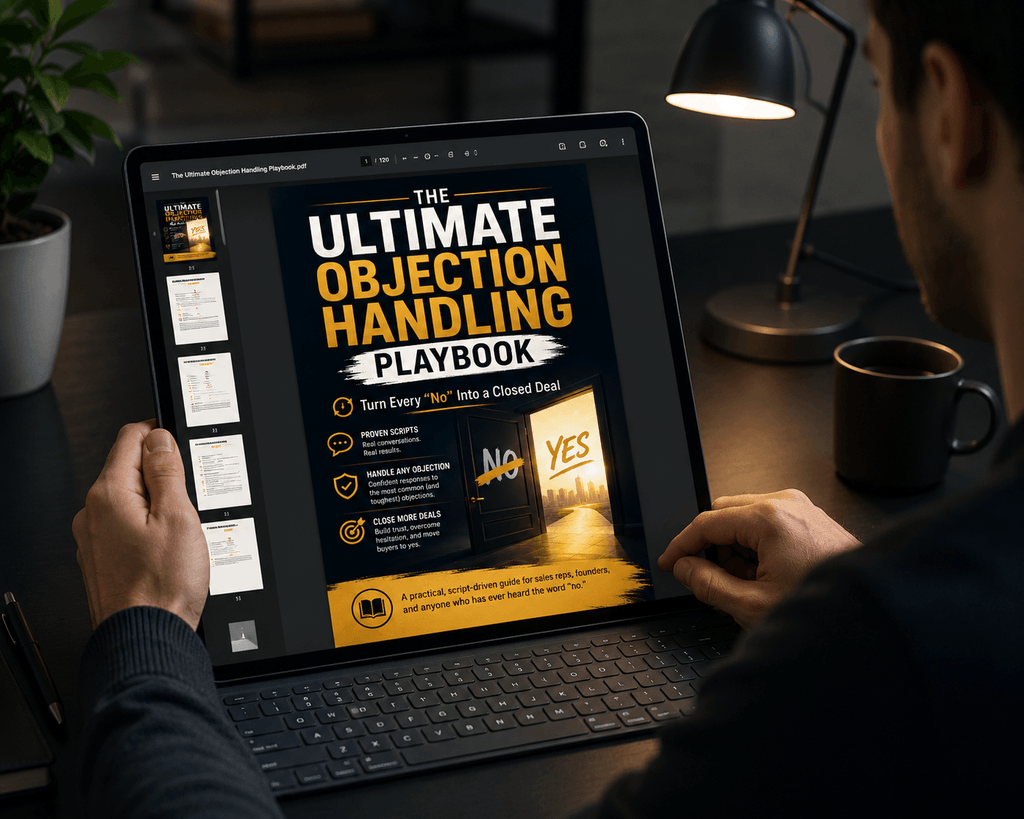
This article covers the foundation. Our ebook goes deeper, with a full system for handling price objections in real conversations. Inside you’ll find:
- ✅ Word-for-word price objection scripts for phone, email, and in-person selling
- ✅ Question banks to uncover the real concern behind “too expensive”
- ✅ Negotiation language that protects your margin
- ✅ Value-framing worksheets to prepare before every quote
- ✅ Role-play drills to build confidence
- ✅ Quick-reference cheat sheets for use during calls
- ✅ Examples adapted for Canadian buyers, including tax and currency considerations
(Add your ebook title, price in CAD, format, and refund policy here.)
Frequently Asked Questions
How do you handle price objections in sales?
Stay calm, acknowledge the concern, ask questions to find the real issue, reconnect the price to value, and offer options instead of an immediate discount.
What is the best response to “it’s too expensive”?
Ask what they were expecting or what they’re comparing it to. This uncovers whether the issue is value, budget, or something else.
Should I lower my price when a customer objects?
Not right away. Discounting too early can signal that the price was flexible and weaken your value. If you adjust, trade it for something, such as a longer term, a smaller scope, or a faster decision.
How do I handle a competitor’s lower price?
Compare what’s actually included. Differences in support, quality, onboarding, and results often explain the gap. Stay honest and never speak negatively about the competitor.
Is a price objection always about price?
Not always. Sometimes it signals a lack of perceived value, a hidden concern, or a polite way of saying no. Questions help you find out.
Do these techniques work in Canada?
Yes. The principles apply across markets. In Canada, be especially clear about taxes, quote in CAD where possible, and focus on transparent, low-pressure communication.
Can I use these scripts for email and phone?
Yes. They can be adapted for phone, email, text, and in-person conversations.
Will this ebook guarantee more sales?
No ebook can guarantee results. It gives you a clear method and practical language to use with confidence.
Handle Price With Confidence
A price objection isn’t the end of the conversation. It’s the moment the buyer is telling you what they need to feel sure. With the right questions and a clear method, you can protect your value and help more people say yes.
👉 Get the Price Objection Handling Ebook now and learn exactly what to say when the price comes up.